
If you’re dealing with a dog vomiting white foam, it’s one of those moments that sends most owners straight into worry mode — a puddle of frothy, white vomit on the floor with no obvious explanation. Is it something they ate? A sign of a stomach bug? Something more serious, like bloat? Is it something they ate? A sign of a stomach bug? Something more serious, like bloat? The honest answer is: it depends — white foam vomiting can range from a completely harmless, one-time event to an early warning sign of a life-threatening emergency.
This guide walks through what white foam vomit actually is, every common cause behind it, how to tell a mild upset stomach from something urgent, and what you can safely do at home versus when you need to call your vet immediately.
What Does White Foam Vomit Actually Mean?
White, foamy vomit is usually a mix of saliva, mucus, and gastric fluid, with air bubbles whipped in during the act of vomiting — which is what gives it that frothy, foamy texture. It’s most commonly seen when a dog’s stomach is essentially empty, since there’s no food left to bring up, just fluid and air.
This is different from yellow vomit, which usually means bile (a digestive fluid made by the liver) has been brought up along with the stomach contents, or clear vomit, which tends to be mostly water or saliva. The color and texture give useful clues, but on their own they don’t tell you the underlying cause — that requires looking at the full picture, including timing, frequency, and other symptoms.
Vomiting vs. Regurgitation: Why the Difference Matters
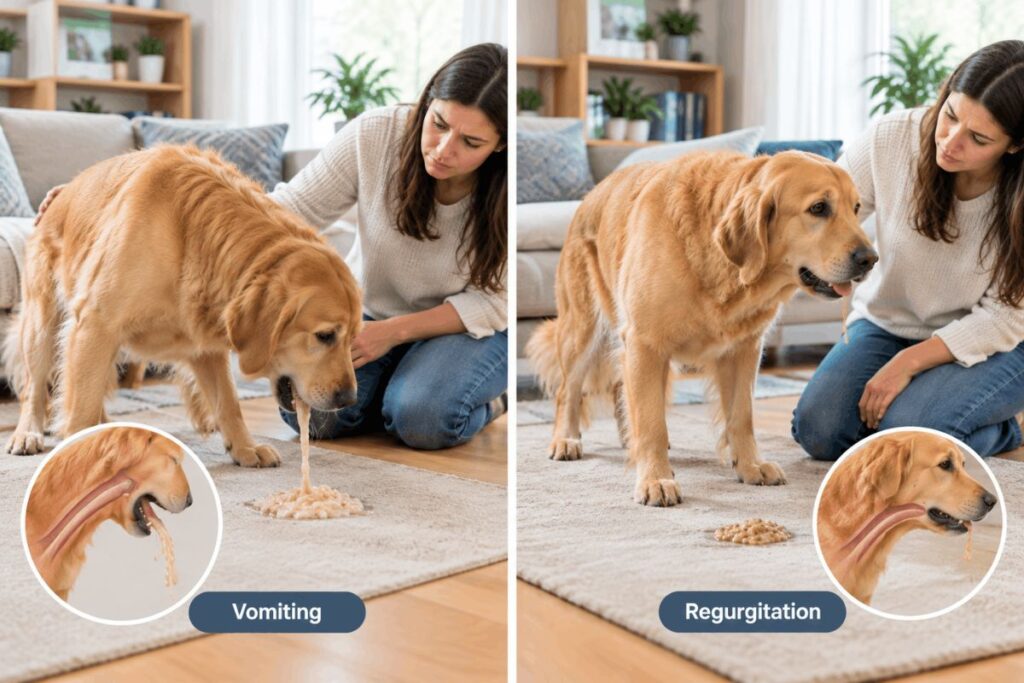
Before diagnosing the cause, it helps to know whether your dog is actually vomiting or regurgitating, since these are two distinct processes with different causes. According to the American Kennel Club’s guide to vomiting versus regurgitation, vomiting is an active process involving abdominal effort, while regurgitation is passive and comes from the esophagus rather than the stomach.
| Feature | Vomiting | Regurgitation |
| Effort | Active — heaving, retching, abdominal contractions | Passive — no straining, often sudden and quiet |
| Timing | Can happen soon after eating or hours later | Usually within minutes of eating or drinking |
| Appearance | Partially digested food, possible bile, foam | Undigested food, often tube- or sausage-shaped |
| Warning signs | Drooling, lip licking, restlessness beforehand | Little to no warning; dog seems surprised |
| Where it comes from | Stomach or upper small intestine | Esophagus, before food reaches the stomach |
White foam is almost always a vomiting symptom rather than regurgitation, since regurgitated material tends to look like intact, undigested food rather than foam.
Common Causes of White Foam Vomiting in Dogs

There’s a wide range of possible causes, from completely benign to genuinely urgent. Here’s a rundown of the most common ones.
Empty Stomach (Bilious Vomiting Syndrome)
This is one of the most frequent and least concerning causes. When a dog’s stomach goes too long without food, stomach acid and bile can build up and irritate the stomach lining, triggering vomiting — often first thing in the morning or late at night. This pattern is sometimes called bilious vomiting syndrome, and it’s especially common in dogs fed only once or twice a day on an inconsistent schedule.
Eating Too Fast or Grass Ingestion
Dogs that gulp their food can end up swallowing excess air, which contributes to foamy vomit shortly after eating. Grass ingestion is another common trigger — the grass itself can combine with saliva and stomach fluid to create a foamy, stringy vomit, whether or not the grass eating was related to nausea in the first place.
Acid Reflux (Gastroesophageal Reflux)
Similar to heartburn in people, acid reflux happens when stomach acid moves backward into the esophagus, causing irritation, lip licking, frequent swallowing, and foamy vomiting. It’s more common in dogs with long gaps between meals or dogs prone to sensitive stomachs.
Dietary Indiscretion
“Dietary indiscretion” is the catch-all term vets use for a dog eating something they shouldn’t — table scraps, garbage, spoiled food, or a non-food object. Rich, fatty foods are a particularly common trigger, and swallowed foreign objects can sometimes cause foamy vomiting as the body tries to expel whatever is causing irritation or a blockage.
Motion Sickness
Some dogs, especially puppies and young dogs whose inner ear balance system is still maturing, get carsick. Drooling and foamy vomiting during or shortly after car rides is a classic sign.
Kennel Cough and Respiratory Infections
A persistent, hacking cough from kennel cough or another respiratory infection can trigger a gagging reflex that produces foamy white vomit or saliva, which owners sometimes mistake for a digestive issue rather than a respiratory one. A cough that sounds like something is stuck in the throat, alongside occasional foamy expulsion, points toward the respiratory tract rather than the stomach.
Pancreatitis
Pancreatitis, or inflammation of the pancreas, disrupts normal digestion and commonly causes nausea and vomiting, sometimes foamy. Dogs that have recently eaten a fatty meal, and dogs with diabetes or a history of pancreatitis, are at higher risk.
Intestinal Parasites
Parasites like roundworms, hookworms, whipworms, giardia, and coccidia can all irritate the digestive tract enough to cause vomiting, including foamy vomit on an empty stomach. Puppies and dogs without regular parasite prevention are more commonly affected.
Toxin Ingestion
Certain toxic plants, chemicals, human medications, or foods (like chocolate, xylitol, or certain mushrooms) can trigger vomiting as the body tries to expel the substance. If toxin exposure is a possibility, this is a same-day veterinary concern rather than a wait-and-see situation.
Kidney or Liver Disease
Organ dysfunction, particularly of the kidneys or liver, can allow toxins to build up in the bloodstream, which often shows up as vomiting, sometimes alongside other signs like increased thirst or urination, appetite loss, or lethargy.
Parvovirus (Especially in Puppies)
Parvovirus is a serious, highly contagious viral infection that primarily affects unvaccinated or incompletely vaccinated puppies. Foamy or frothy vomiting, often paired with bloody diarrhea, lethargy, and loss of appetite, is a hallmark combination that warrants an emergency vet visit, especially in young puppies.
Bloat (GDV): The Emergency You Shouldn’t Miss

Bloat, technically known as gastric dilatation-volvulus (GDV), is the most urgent cause on this list and deserves its own section. With GDV, the stomach fills with gas and can twist on itself, cutting off blood supply and trapping stomach contents with no way out. It’s a rapidly life-threatening emergency.
One of the classic early signs of bloat is unproductive retching — a dog straining to vomit but bringing up only small amounts of white foam or nothing at all, because the twisted stomach won’t let anything through.
Other signs of bloat include:
- A visibly swollen or distended abdomen
- Restlessness, pacing, or an inability to get comfortable
- Drooling
- Rapid breathing or signs of respiratory distress
- A painful abdomen when touched
- Weakness or collapse in advanced cases
Heavy, labored breathing paired with distress can be hard to distinguish from ordinary panting at first glance — if you’re trying to work out whether your dog’s breathing looks abnormal, this guide on why dogs pant so much can help you spot the difference between normal panting and a sign that something is wrong.
Large, deep-chested breeds — Great Danes, German Shepherds, Standard Poodles, and similar breeds — are at higher risk, though bloat can occur in other dogs too. According to the VCA Hospitals overview of vomiting in dogs, any vomiting accompanied by signs like abdominal pain, lethargy, or an inability to keep anything down warrants prompt veterinary evaluation — and with suspected bloat specifically, that means going to an emergency vet immediately rather than waiting to see if it resolves.
Puppy vs. Adult Dog White Foam Vomiting
Puppies tend to vomit more frequently than adult dogs, in part because their digestive systems are still developing and they’re more likely to get into things they shouldn’t. Puppies are also more vulnerable to complications from vomiting, including dehydration and low blood sugar (hypoglycemia), which can develop faster in small, young bodies. Because of the added risk of parvovirus and faster dehydration, it’s generally wise to involve a vet sooner for a vomiting puppy than you might for a healthy adult dog with a single, isolated episode.
When Is White Foam Vomiting an Emergency?
Context is everything. A single episode of white foam vomit in a dog who’s otherwise acting completely normal is often not an emergency. The following situations call for prompt veterinary attention.
| Situation | Response |
| One-time vomiting, dog seems fine afterward | Monitor at home; withhold food briefly, keep water available |
| Vomiting more than once in a day, or repeated over 24 hours | Contact your vet |
| Vomiting with blood (bright red or coffee-ground appearance) | Seek veterinary care promptly |
| Distended, hard, or painful abdomen | Emergency vet visit — possible bloat |
| Non-productive retching (straining without bringing anything up) | Emergency vet visit — possible bloat |
| Lethargy, weakness, or collapse | Emergency vet visit |
| Known or suspected toxin exposure | Contact your vet or a pet poison hotline immediately |
| Vomiting plus diarrhea, especially bloody diarrhea, in a puppy | Emergency vet visit — possible parvovirus |
| Vomiting lasting more than 24 hours | Veterinary evaluation needed |
If your dog’s vomiting is showing up alongside other changes, it’s worth checking those symptoms too. A dog that’s also drinking noticeably more than usual is worth discussing with your vet, since excessive thirst in dogs combined with vomiting can point toward kidney disease, diabetes, or other systemic issues. Likewise, if your dog feels unusually warm or seems generally unwell, knowing how to tell if a dog has a fever will help you describe the full picture accurately when you call your vet.
How to Help a Dog Vomiting White Foam at Home

For a mild, isolated episode in an otherwise healthy adult dog, a few simple steps are usually appropriate:
- Don’t withhold water. Offer small amounts frequently rather than a large bowl all at once, which can trigger more vomiting.
- Consider a short food break. Some vets recommend withholding food for a few hours (not water) to let the stomach settle, though current guidance increasingly favors a small, bland meal sooner rather than prolonged fasting — check with your vet for their specific recommendation.
- Reintroduce food gradually with something bland like boiled chicken and rice, in small portions, once your dog seems ready to eat again.
- Watch closely for the next 12–24 hours for repeat vomiting, diarrhea, lethargy, or appetite loss.
- Don’t give human medications without your vet’s guidance. Some vets do use certain over-the-counter antacids for specific cases, but dosing and appropriateness depend on your dog’s size, health history, and the underlying cause — this isn’t something to guess at home.
If symptoms escalate at any point — repeated vomiting, blood, lethargy, or a swollen abdomen — stop the wait-and-see approach and call your vet.
What to Expect at the Vet
If your dog’s vomiting needs a professional workup, your vet will typically start with a physical exam and a detailed history (timing, frequency, diet, recent changes, possible toxin exposure). From there, depending on what they find, they may recommend:
- Bloodwork to check organ function and rule out kidney, liver, or pancreatic involvement
- X-rays to look for a foreign object, gas patterns consistent with bloat, or other abnormalities
- Abdominal ultrasound for a more detailed look at the stomach, intestines, and pancreas
- Fecal testing to check for intestinal parasites
- Additional tests as needed based on the suspected cause
Comparing Vomit Types and Patterns
White Foam vs. Yellow Bile vs. Clear Liquid
| Vomit Appearance | Likely Meaning |
| White foam | Empty stomach, mucus and gastric fluid, air incorporated during vomiting |
| Yellow, bile-tinged | Bile has been brought up, often seen with an empty stomach or bilious vomiting syndrome |
| Clear liquid | Mostly saliva or water, often from drinking right before vomiting |
| Contains food | Recently eaten meal being expelled, more common shortly after eating |
| Contains blood | Always warrants prompt veterinary evaluation |
Acute vs. Chronic Vomiting
Veterinarians generally distinguish between acute vomiting — lasting less than 3–4 days with no other symptoms, and often resolving on its own — and chronic vomiting, which lasts longer than 5–7 days, happens intermittently over time, or doesn’t respond to basic care. Chronic or recurring vomiting always deserves a proper veterinary workup rather than repeated at-home management.
Vomiting White Foam vs. Coughing Up White Foam
These can look nearly identical to an owner, which is part of why kennel cough is sometimes mistaken for a stomach issue. If the episode is preceded by a harsh, honking cough and your dog otherwise seems to be bringing up saliva rather than stomach contents, a respiratory cause is more likely than a digestive one — worth mentioning specifically when you describe the episode to your vet.
Preventing White Foam Vomiting
While not every cause is preventable, several habits reduce the odds of recurring episodes:
- Feed on a consistent schedule, ideally split into two or more smaller meals rather than one large one, to avoid long empty-stomach stretches
- Use a slow-feeder bowl if your dog eats too quickly
- Keep your dog on a consistent, high-quality diet and introduce new foods gradually
- Stay current on parasite prevention
- Keep toxic foods, plants, and chemicals out of reach
- Avoid feeding table scraps or rich, fatty leftovers
- Keep up with regular veterinary checkups, especially for senior dogs or dogs with a history of digestive issues
Frequently Asked Questions
Q: Why does my dog throw up white foam in the morning specifically?
This is a classic pattern for bilious vomiting syndrome, caused by an empty stomach overnight allowing acid and bile to build up and irritate the stomach lining.
Q: Is it normal for a dog to vomit white foam occasionally?
An occasional, isolated episode in an otherwise healthy dog isn’t unusual and often resolves without treatment, though frequent or repeated episodes should be evaluated.
Q: Why does my dog vomit white foam after drinking water?
Drinking too much water too quickly, especially after exercise or on an empty stomach, can trigger vomiting in some dogs — the vomit may look like mostly foam and liquid rather than food.
Q: Can stress or anxiety cause a dog to vomit white foam?
Yes, in some dogs, stress and anxiety can contribute to nausea and vomiting, similar to how stress affects digestion in people.
Q: What does white foam vomit with blood mean?
Any blood in vomit — whether bright red or resembling coffee grounds — warrants prompt veterinary evaluation, since it can indicate irritation, ulceration, or a more serious underlying issue.
Q: Why is my puppy vomiting white foam?
Puppies vomit for many of the same reasons adult dogs do, but they’re also more prone to dietary indiscretion, parasites, and — especially if unvaccinated — parvovirus, which makes prompt veterinary attention more important in young puppies.
Final Thoughts
Most of the time, a dog vomiting white foam is dealing with something manageable — an empty stomach, mild indigestion, or eating too fast. The key is paying attention to the full context: how often it’s happening, what else is going on, and whether your dog otherwise seems like themselves. Isolated, mild episodes are usually fine to monitor at home, but repeated vomiting, blood, lethargy, or any sign pointing toward bloat means it’s time to call your vet without delay.