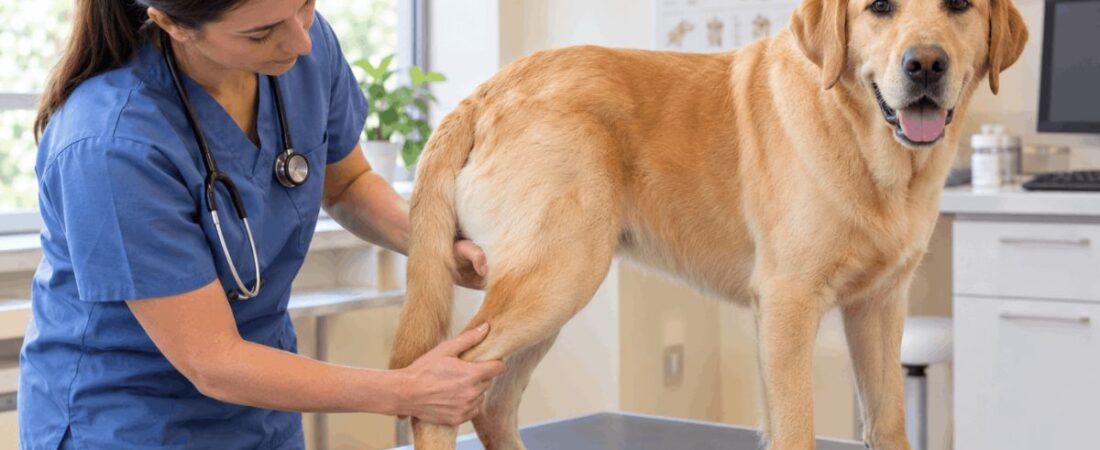
If your dog has suddenly started limping on a back leg, has trouble rising, or has been diagnosed with a torn cranial cruciate ligament, your vet has probably recommended TPLO surgery for dogs — one of the most common orthopedic procedures in veterinary medicine. It’s one of the most common orthopedic procedures performed on dogs — and also one of the most misunderstood, since it involves cutting and reshaping bone rather than repairing the torn ligament itself.
This guide covers everything owners typically want to know: what TPLO actually does, how it compares to other surgical options, realistic costs, the week-by-week recovery process, success rates, and the warning signs that mean something isn’t healing right.
What Is TPLO Surgery for Dogs?
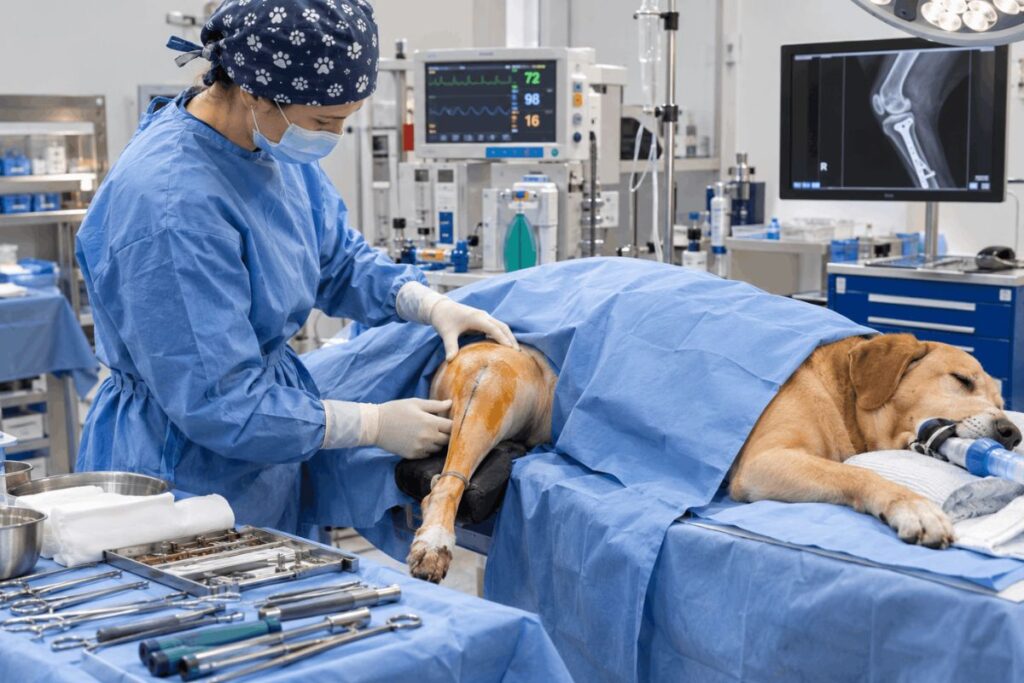
TPLO stands for Tibial Plateau Leveling Osteotomy. Rather than trying to replace or repair the torn ligament, the surgeon changes the mechanics of the knee itself so the ligament is no longer needed for stability.
During the procedure, the surgeon makes a curved cut in the top of the tibia (shin bone), rotates that section to a flatter angle, and secures it in its new position with a stainless steel bone plate and screws. Once the bone heals in this new position, the knee stays stable during normal movement without relying on the cranial cruciate ligament at all. According to VCA Hospitals’ overview of TPLO surgery, this shift in mechanics is what makes TPLO one of the more durable long-term solutions for cruciate ligament injuries in dogs.
What Is a CCL Tear, and Why Does It Lead to TPLO?
The cranial cruciate ligament (CCL) is the canine equivalent of the human ACL. It sits inside the knee joint and keeps the tibia from sliding forward under the femur. When it tears, that sliding motion — called a positive drawer sign — causes instability, pain, and progressive joint damage every time your dog puts weight on the leg.
Unlike human ACL injuries, which are usually caused by a sudden, acute event like a sports injury, canine CCL tears often develop gradually. The ligament weakens over weeks or months before a specific limp or “pop” moment draws attention to it.
Signs and Symptoms of a Torn CCL in Dogs
| Symptom | What It Looks Like |
| Stiffness after rest | Most noticeable when a dog first gets up after lying down |
| Hind leg lameness | Limping that may come and go, or worsen with activity |
| Difficulty rising or jumping | Hesitation or struggle getting up, onto furniture, or into the car |
| Thickened or swollen knee | A firmer, bonier feel to the joint compared to the other side |
| Decreased range of motion | The knee doesn’t bend or extend as fully as normal |
| “Sit” test abnormality | Sitting with the affected leg held out to the side instead of tucked normally |
| Muscle loss in the thigh | Gradual thinning of the muscle on the injured leg from disuse |
Pain isn’t always obvious with a CCL tear — the limping is often driven by instability rather than sharp pain, so some dogs seem to tolerate it more than owners expect.
How Vets Diagnose a CCL Tear
Before anyone talks about TPLO, your vet needs to confirm the knee is actually unstable from a cruciate injury and not something else, like hip dysplasia, a luxating patella, or a different orthopedic issue.
A typical workup includes:
- Orthopedic exam and gait observation — watching how your dog walks, stands, and sits, and feeling for swelling, heat, or thickening around the knee
- Cranial drawer test — the vet gently checks whether the tibia slides forward under the femur, which indicates a torn or damaged ligament
- Tibial compression test — a related manual test that reproduces the same abnormal forward motion under simulated weight-bearing
- X-rays — used to look for joint effusion (fluid buildup), early arthritis, and to measure the tibial plateau angle (TPA), a key number used to plan the TPLO surgery itself
- Sedated exam — some dogs guard the knee so much when awake that a light sedation is needed to get an accurate drawer test result
- Advanced imaging (less common) — MRI or arthroscopy is occasionally used in unclear or complicated cases, particularly to evaluate the meniscus
Partial vs. Complete CCL Tears
Not every CCL injury is a full rupture. A partial tear means some ligament fibers are still intact, and these cases can be trickier to diagnose since the drawer test may be subtle or intermittent. Partial tears often go on to become complete tears over time as the weakened ligament fails further, which is one reason vets don’t always recommend a strict “wait and see” approach even when symptoms seem mild. Management can range from activity restriction and monitoring to surgery, depending on how much instability is present and how the individual dog is doing.
What Causes CCL Tears in Dogs?
Most canine CCL tears result from gradual degeneration of the ligament rather than a single traumatic injury, though a bad jump or awkward landing can be the final straw. Risk factors include:
- Breed and size — large and giant breeds (Labradors, Rottweilers, Newfoundlands, Golden Retrievers) are disproportionately affected
- Obesity — excess weight puts chronic extra strain on the knee joint
- Age — middle-aged and senior dogs are more commonly affected, though it can happen at any age
- Genetics and conformation — some dogs are simply built with knee angles that place more stress on the ligament over time
- Activity level — very active or athletic dogs face more repetitive stress on the joint
Is Surgery Always Necessary for a Torn CCL?
Not always. The decision depends less on a fixed weight cutoff and more on the overall picture: your dog’s size, activity level, degree of knee instability, age, general health, and how the knee responds to a thorough orthopedic exam. That said, larger and more active dogs tend to do less well with non-surgical management, since ongoing instability in a heavily loaded joint speeds up arthritis and often leads to further damage inside the knee. Smaller, less active dogs sometimes do reasonably well with strict rest, weight management, and a brace, though outcomes vary from dog to dog. This is ultimately a decision to make with your vet or a veterinary surgeon after they’ve examined your dog’s specific knee.
TPLO vs. Other Surgical Options
TPLO isn’t the only surgical approach to a torn CCL. Here’s how the three most common procedures compare.
| Procedure | Best For | Invasiveness | Recovery Time | Reported Outcomes |
| TPLO (Tibial Plateau Leveling Osteotomy) | Often favored for larger or more active dogs | High — bone is cut and plated | 8–12 weeks | Studied outcomes are generally strong; see success rate section below |
| TTA (Tibial Tuberosity Advancement) | Medium-to-large dogs | High — bone is cut and repositioned | Similar to TPLO | Effective for many dogs, though some comparative studies report a somewhat higher complication rate than TPLO |
| Extracapsular repair (lateral suture) | Smaller or less active dogs | Lower — no bone cutting | Often faster, several weeks | Generally good outcomes in smaller dogs; less consistently reliable in larger, heavier dogs |
A 2013 retrospective comparison published in Veterinary Surgery found that, more than a year after surgery, dogs treated with TPLO and a suture-based technique called TightRope reached full function significantly more often than dogs treated with TTA, though all three techniques produced meaningful improvement for most dogs. Individual results vary with the surgeon’s experience with a given technique, so this is worth discussing directly with whoever will be performing your dog’s surgery.
TPLO is frequently described by veterinary surgeons as a preferred option for larger or more athletic dogs because of its long-term joint stability, though the right choice always depends on your individual dog’s size, age, activity level, and your surgeon’s experience with each technique.
Who Performs TPLO Surgery?
TPLO can be performed by a general practice veterinarian with additional orthopedic training, but many owners are referred to a board-certified veterinary surgeon — identifiable by the credential DACVS (Diplomate of the American College of Veterinary Surgeons). Board-certified surgeons complete years of additional residency training specifically in surgery and tend to perform a higher volume of TPLO procedures, which some studies have associated with lower complication rates. It’s reasonable to ask any vet performing the surgery how many TPLOs they do in a typical year, and whether a referral to a specialist is available in your area.
How Much Does TPLO Surgery Cost?
TPLO is a specialized procedure, and pricing varies significantly by region, hospital, and whether a board-certified surgeon performs it.
| Cost Component | Typical Range |
| Surgery itself | $2,500 – $6,000 |
| Pre-surgical workup (bloodwork, X-rays, consultation) | Up to $2,000 |
| Both knees (staged or same-visit bilateral surgery) | Can reach $9,000+ combined |
| Post-operative rechecks and physical therapy | Often billed separately |
Total cost, including workup and aftercare, commonly lands somewhere between $4,000 and $8,000 per knee. Pet insurance that was active before the injury may cover a significant portion — it’s worth checking your policy’s orthopedic and pre-existing condition terms before scheduling surgery.
Ways to Pay for TPLO Surgery
For owners without insurance, or facing a gap between the bill and what’s covered, common options include:
- Pet insurance (if purchased before the injury and diagnosis)
- Veterinary financing services like CareCredit or Scratchpay, which offer payment plans
- Payment plans directly through the surgical hospital, which some clinics offer for larger procedures
- Nonprofit and breed-specific assistance funds, which sometimes help with orthopedic surgery costs for qualifying owners
- Getting a second quote, since prices can vary meaningfully between a specialty referral hospital and a general practice offering the procedure
TPLO Surgery Recovery Timeline
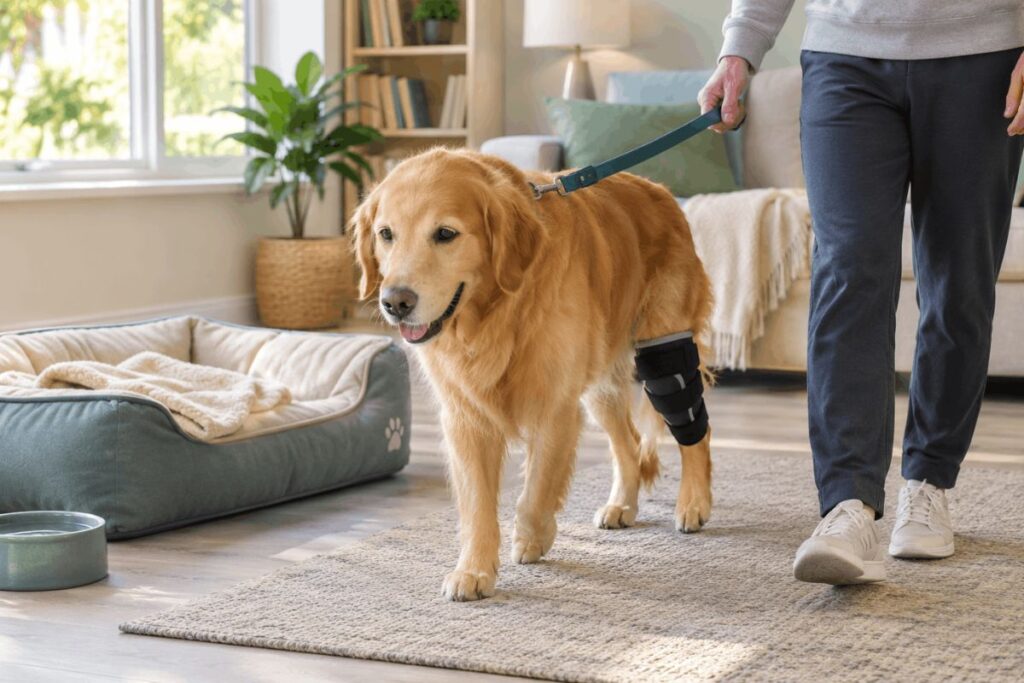
Recovery is just as important as the surgery itself, and skipping steps is one of the most common causes of complications.
| Phase | Timeframe | What Happens |
| Immediate post-op | Days 1–14 | Pain management, incision monitoring, strict confinement, e-collar to prevent licking |
| Restricted activity | Weeks 2–6 | Short leashed potty walks only; no running, jumping, or stairs; possible early physical therapy |
| Gradual activity increase | Weeks 6–12 | Longer supervised leash walks, follow-up X-rays to confirm bone healing, controlled physical therapy |
| Return to normal activity | 3+ months | Most dogs cleared for off-leash activity and normal exercise, pending vet approval |
Will My Dog Walk on the Leg Right Away?
Often, yes. Many dogs bear at least some weight on the operated leg within a day of surgery, since TPLO stabilizes the joint immediately rather than waiting on soft tissue to heal. That said, every dog recovers at a different pace — a dog that’s hesitant to use the leg for the first few days isn’t necessarily a cause for panic, though it’s worth mentioning at a follow-up if it persists.
Signs of a Possible Post-Surgery Complication
Contact your surgeon promptly if you notice any of the following during recovery:
- Redness, swelling, discharge, or odor at the incision site
- A sudden increase in limping after initial improvement
- Persistent, worsening swelling around the knee
- Reluctance to bear any weight for more than a few days
- Signs of general illness alongside the leg symptoms
A warm knee combined with your dog seeming generally unwell is also worth paying attention to — knowing how to tell if a dog has a fever can help you describe what you’re seeing accurately if you need to call your vet about a possible post-surgical infection.
TPLO Surgery Success Rate
TPLO is generally considered one of the more reliable surgical options for a torn CCL, though “success” is worth unpacking rather than reducing to a single number.
A 2013 retrospective study in Veterinary Surgery (Christopher et al.) followed dogs for more than a year after surgery and found that about 93% of TPLO cases reached what owners and veterinarians classified as full function, based on questionnaires and medical records. A separate systematic review of the surgical literature noted an important nuance: when researchers use objective gait analysis rather than owner impressions, complete return to a normal gait is found in a smaller share of dogs, even though most dogs show clear, meaningful improvement in comfort and function. In practical terms, this means most dogs do notably better after TPLO, even if a smaller subset don’t return to a gait that’s indistinguishable from before the injury.
For athletic dogs specifically, a study by Heidorn, Canapp, and Zink (2018) found that roughly 65% of dogs undergoing TPLO had a good prognosis for returning to agility competition, with about 80% of those dogs back in the sport within nine months and an average recovery time of around seven and a half months. The University of Missouri Veterinary Health Center’s overview of TPLO similarly describes TPLO as one of the more consistently successful techniques for stabilizing the CCL-deficient knee, while noting that individual outcomes still depend on factors like the severity of joint damage at the time of surgery.
Risks and Complications of TPLO Surgery
As with any major orthopedic procedure, TPLO carries some risk, even though most dogs recover without major issues. Published complication rates vary by study, but figures in the range of roughly 18–28% for any complication (major or minor) are commonly reported, with only a smaller subset — often cited around 2–8% — serious enough to require a second surgery.
| Complication | Notes |
| Infection | At the incision site or, less commonly, around the implant |
| Implant-related issues | Plate or screw loosening, migration, or (rarely) fracture |
| Delayed bone healing | May require extended activity restriction |
| Ongoing joint inflammation | Managed with anti-inflammatory medication and rest |
| Meniscal injury (before or after surgery) | The cartilage cushion in the knee can be damaged alongside the CCL |
| Opposite knee injury | Not a direct surgical complication, but a well-documented long-term risk (see below) |
Following your surgeon’s activity restrictions closely is one of the most meaningful things you can do to reduce the risk of most of these complications.
Caring for Your Dog After TPLO Surgery
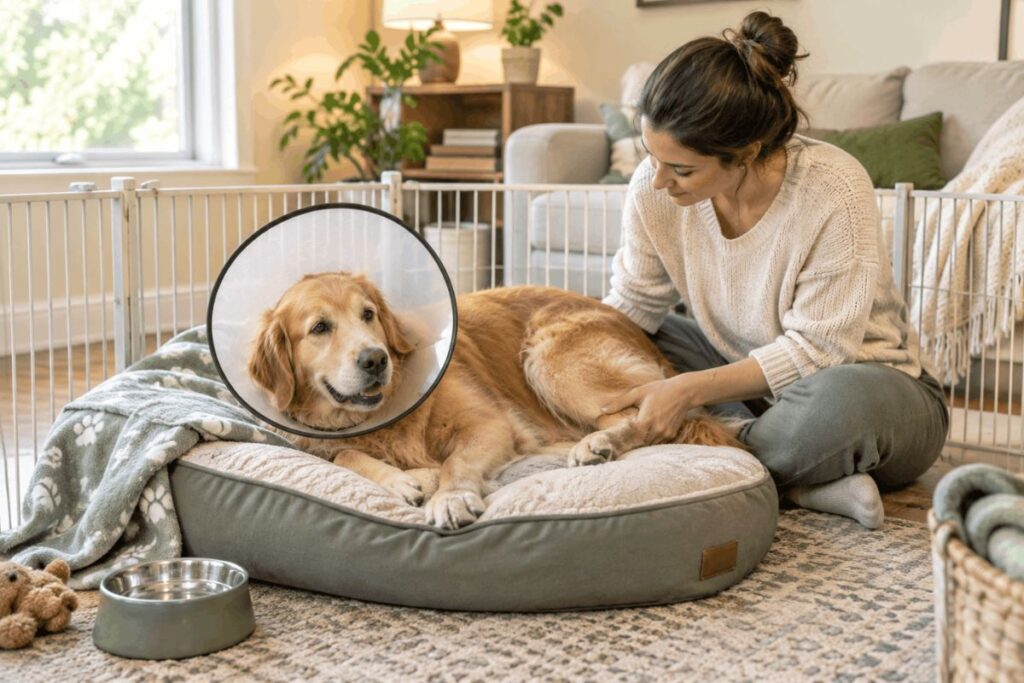
Aftercare makes or breaks the outcome of TPLO surgery just as much as the procedure itself.
- Confine your dog to a crate or small, non-slip space between bathroom breaks for the first several weeks.
- Use a harness instead of a collar for leash walks to avoid unnecessary strain while helping support your dog’s balance.
- Keep the e-collar on until your vet confirms the incision is fully healed, even if your dog seems annoyed by it.
- Stick to short, controlled leash walks — no off-leash time, running, jumping onto furniture, or stairs until cleared.
- Follow the physical therapy plan if one is prescribed; controlled range-of-motion exercises and, in some cases, hydrotherapy can meaningfully improve outcomes.
- Attend every follow-up appointment, including X-rays that confirm the bone has healed before activity is increased.
Some dogs pant heavily or seem restless during early recovery due to pain, medication, or simple frustration with confinement — if that sounds familiar, this guide on why dogs pant so much can help you figure out whether it’s a normal recovery response or something to flag to your vet. For dogs that seem particularly anxious about crate confinement, some owners also find calming techniques like a vagus nerve reset helpful for easing stress during the weeks of restricted activity.
Setting Up Your Home for Recovery
A few practical adjustments in the first weeks make a real difference:
- Non-slip flooring — use rugs or yoga mats on hardwood or tile to prevent slipping, which can strain the healing knee
- Ramps or a supportive sling for dogs that need help with stairs, cars, or getting onto furniture
- A low-sided crate or gated area, rather than free roam of the house, to limit jumping and sudden movement
- Elevated food and water bowls if bending down is uncomfortable in the first days after surgery
- A consistent, calm routine, since sudden excitement (a doorbell, another pet, a visitor) is a common trigger for a dog to forget their restrictions and jump or run
Diet and Weight Management During Recovery
Keeping your dog at a healthy weight matters more than usual during TPLO recovery. Extra weight adds strain to the healing knee and to the opposite leg, which is already carrying more load while the surgical leg recovers. Because activity is drastically reduced for weeks, some dogs gain weight during recovery if their food portions aren’t adjusted — it’s worth asking your vet whether a temporary reduction in calories is appropriate given the drop in exercise.
Physical Therapy and Rehab Options
Beyond basic activity restriction, structured rehab can meaningfully support recovery. Depending on what’s available in your area and recommended by your surgeon, this might include:
- Passive range-of-motion exercises — gently moving the knee through its range while your dog is relaxed
- Underwater treadmill therapy — allows controlled, low-impact movement that builds strength without full weight-bearing stress
- Cold laser therapy — sometimes used to help manage inflammation and support healing
- Balance and proprioception exercises, introduced later in recovery as strength improves
Not every dog needs formal rehab, but for higher-activity dogs or more complex cases, it can shorten the time it takes to return to full function.
Can Both Knees Need TPLO Surgery?
It’s a real and fairly common possibility, though exactly how common depends heavily on the individual dog and which study you look at. Reported rates of the opposite knee later rupturing vary widely — some studies put the figure around 20% or lower, others report figures closer to 40–60%, and risk appears to depend on factors like age at first injury, body weight, and breed. One large retrospective study, for example, found a lower risk (around 19%) in dogs that were already 8 years or older at the time of their first CCL tear, with the risk decreasing further as dogs aged. Younger, heavier dogs and certain breeds, including Rottweilers, have been associated with higher risk in other studies.
The general explanation is that the healthy leg often takes on extra load while the first knee is unstable or healing, which may contribute to added strain over time — though this isn’t the only factor at play. Some surgeons recommend addressing both knees in a staged approach (one at a time, weeks apart) rather than simultaneously, since recovering from bilateral TPLO surgery at once is significantly more demanding for both dog and owner. Your vet or surgeon can give you a more individualized sense of your own dog’s risk based on age, weight, and breed.
Alternatives to TPLO Surgery
TPLO isn’t the only path forward, though it’s often recommended as the most reliable long-term option for larger dogs. Alternatives your vet may discuss include:
- TTA or extracapsular repair — other surgical techniques, better suited to certain dog sizes or budgets
- Custom knee braces — a non-surgical option sometimes used for dogs that aren’t good surgical candidates
- Weight management and controlled exercise — reduces strain on the joint, often paired with other treatments
- Anti-inflammatory medication and joint supplements — manage pain and slow arthritis progression, though they don’t restore joint stability
- Physical therapy — can improve strength and function alongside any of the above options
Common Myths About TPLO Surgery
A few misconceptions come up often enough to be worth addressing directly.
“My dog is still using the leg a little, so it can’t be a full tear.” Not necessarily. Dogs are often surprisingly good at partially loading an unstable knee, especially early on, which is part of why CCL injuries can be under-recognized at first.
“If my dog seems fine on rest and pain meds, we can skip surgery.” Feeling better with rest and medication manages symptoms, but it doesn’t address the underlying instability, which continues to cause joint wear even when your dog seems comfortable.
“TPLO surgery repairs the torn ligament.” It doesn’t — the torn ligament isn’t repaired or replaced. TPLO changes the mechanics of the knee so the ligament is no longer needed for stability, which is a meaningfully different approach than it might sound like from the name.
“Once the plate is in, the knee is 100% like new.” TPLO restores functional stability and greatly improves comfort and mobility for most dogs, but some degree of arthritis in the joint is common over time, even after a successful surgery — ongoing joint support (weight management, sometimes supplements) is still worthwhile.
“Small dogs never need TPLO.” Smaller dogs are more likely to do well with extracapsular repair or even conservative management, but individual cases vary, and some smaller or lighter-breed dogs are still good TPLO candidates depending on their activity level and the severity of the injury.
Frequently Asked Questions
Q: Is TPLO surgery painful for dogs?
There’s discomfort during recovery, but it’s well managed with prescribed pain medication, and most dogs are noticeably more comfortable within the first couple of weeks compared to life with an unstable knee.
Q: How soon can a dog walk after TPLO surgery?
Many dogs put some weight on the leg within a day of surgery, though full, comfortable weight-bearing typically builds gradually over the following weeks.
Q: Can a dog live a normal life after TPLO?
Most dogs return to a good quality of life with normal or near-normal activity levels, including exercise and play, once recovery is complete — though as with any major surgery, individual outcomes vary based on the severity of the original injury, any concurrent joint damage, and how closely aftercare instructions are followed.
Q: What happens if you don’t do TPLO surgery on a dog?
Without surgical stabilization, the knee typically continues to develop arthritis and chronic instability, and the dog often experiences ongoing, worsening lameness over time.
Q: Can TPLO surgery fail?
It can, though it’s uncommon. Failure usually relates to infection, implant problems, or the dog being too active too soon during recovery, which is why strict aftercare matters so much.
Q: Is TPLO surgery worth it for an older dog?
Age alone isn’t usually a disqualifying factor — overall health and anesthesia risk matter more. Many senior dogs recover well and see a real improvement in comfort and mobility.
Q: What breeds are most prone to needing TPLO surgery?
Larger breeds like Labrador Retrievers, Rottweilers, Golden Retrievers, and Newfoundlands are disproportionately affected by CCL tears, though any dog can be affected.
Q: Can small dogs get TPLO surgery?
Yes, though smaller dogs are also reasonable candidates for less invasive options like extracapsular repair, depending on their size, activity level, and surgeon recommendation.
Final Thoughts
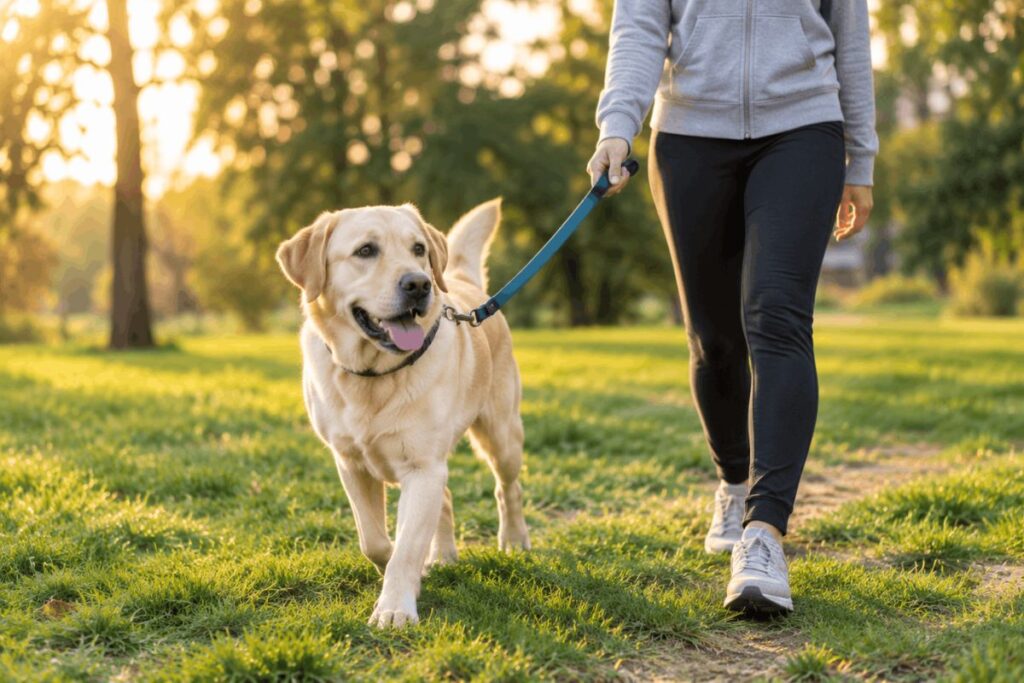
A torn CCL is a painful, disruptive diagnosis, but TPLO surgery has one of the strongest track records of any orthopedic procedure in veterinary medicine for getting dogs back to a comfortable, active life. The surgery itself is only half the process — the weeks of confinement, controlled walks, and follow-up visits are just as critical to a full recovery. Talk with your vet or a board-certified veterinary surgeon about your dog’s specific size, age, and activity level to decide whether TPLO or one of its alternatives is the right fit.