
I’ll never forget the afternoon Bella came home shaking after a thunderstorm. She was panting, pacing, couldn’t settle — and nothing I tried seemed to help. That’s when my vet first mentioned the vagus nerve, and honestly, it changed everything about how I handle her anxiety.
If your dog seems stuck in panic mode, or struggles to calm down after stress, their nervous system might need some support. The term “dog vagus nerve reset” is all over social media right now, and for good reason — though it’s a bit more nuanced than the Instagram reels make it look.
Let’s break it all down, simply and honestly.
What Is the Vagus Nerve in Dogs?
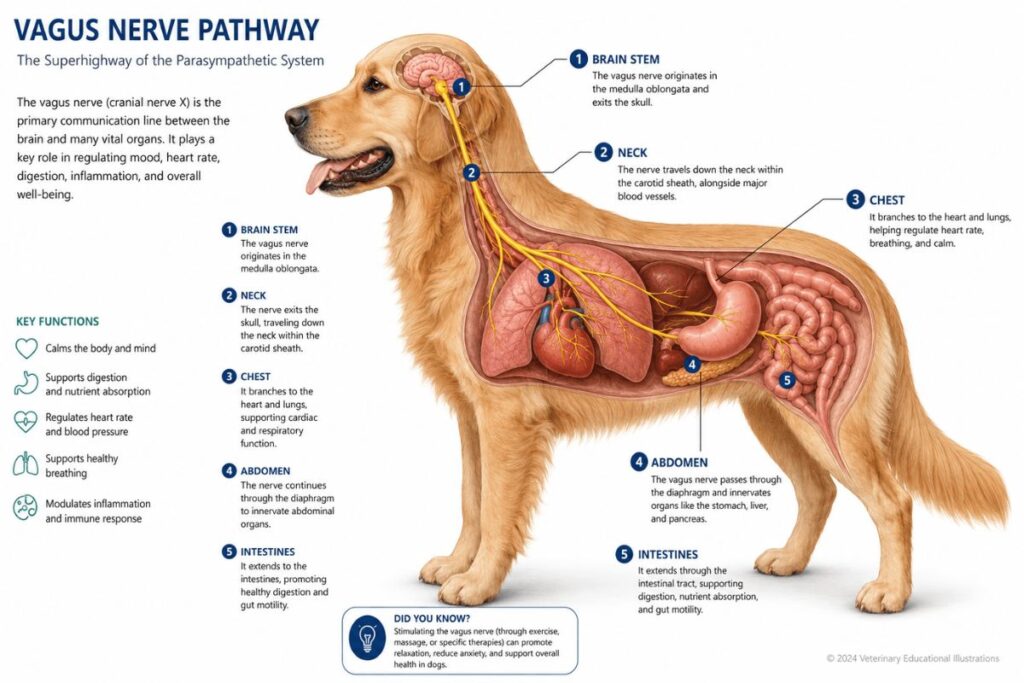
The vagus nerve is one of the longest nerves in your dog’s entire body. It starts in the brain stem and travels all the way down through the neck, chest, and into the abdomen. Along the way, it connects to the heart, lungs, stomach, and intestines — basically the control center for how your dog’s body responds to stress and calm.
When the vagus nerve is functioning well, your dog can shake off stress quickly and return to a relaxed state. Veterinarians call this “good vagal tone,” and it’s essentially your dog’s built-in ability to recover from life’s scary moments.
Fight or Flight vs. Rest and Digest
Your dog’s nervous system runs on two modes. The sympathetic system — fight or flight — kicks in whenever your dog senses danger, loud noises, or something unfamiliar. The parasympathetic system — rest and digest — is the off switch. It’s what brings your dog back down to baseline.
The vagus nerve is the main driver of that parasympathetic system. When it’s activated properly, your dog’s heart rate slows, breathing deepens, and digestion resumes. That’s the goal of a vagus nerve reset — not a literal reboot, but a gentle nudge toward calm.
| Nervous System | Also Called | Triggered By | Effect on Dog |
| Sympathetic | Fight or Flight | Fear, noise, stress | Panting, pacing, alert, tense |
| Parasympathetic | Rest and Digest | Safety, calm, routine | Relaxed, slow breathing, settled |
| Vagus Nerve Role | The bridge | Touch, rhythm, scent | Activates the “calm down” response |
How the Vagus Nerve Controls Your Dog’s Emotions
Most dog owners are surprised to learn this, but the vagus nerve also plays a role in emotional regulation. It connects the gut to the brain — which is why anxious dogs often have sensitive stomachs, and why calm routines genuinely change behavior over time. It’s not magic. It’s biology.
Signs Your Dog’s Vagus Nerve Needs Support
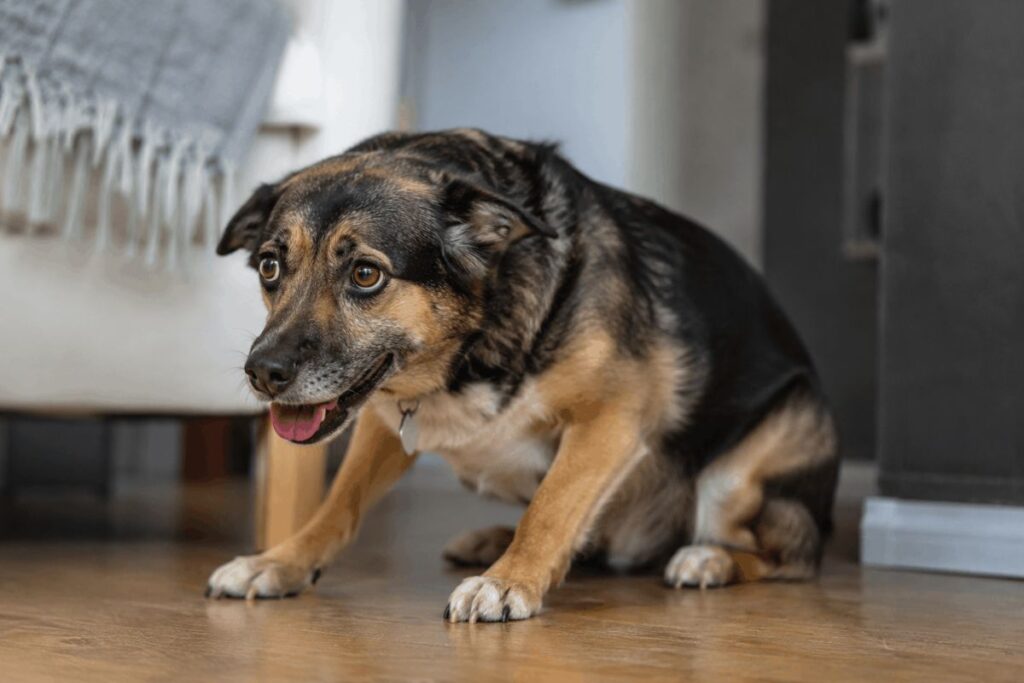
This is where things get interesting. A dog whose nervous system is stuck in overdrive doesn’t always look obviously anxious. Some dogs are subtle about it, and many owners miss the early signs entirely.
Physical Signs to Watch For
Physical signs are usually the first clue that your dog’s nervous system is struggling. These can come and go, or they can become a daily pattern — which is a sign that support is needed.
| Physical Sign | What It Looks Like | Why It Happens |
| Rapid or shallow breathing | Fast panting even when not hot or tired | Sympathetic system stuck in “on” mode |
| Digestive upset | Loose stools, gas, lack of appetite | Gut-brain connection disrupted |
| Constant licking or yawning | Repetitive self-soothing behaviors | Nervous system trying to self-regulate |
| Shaking after stress | Trembling long after the trigger is gone | Slow stress recovery, low vagal tone |
Behavioral Signs Dog Owners Often Miss
Behavior changes are sometimes harder to notice because we chalk them up to “just how my dog is.” But a dog that can’t settle, reacts to everything, or refuses food after excitement is showing real signs of nervous system dysregulation.
Watch for: trouble relaxing after walks, overreacting to small sounds, snapping or growling more than usual, refusing to eat after stressful events, or seeming “checked out” and unresponsive. That last one — the freeze response — can actually look like calm, but it isn’t. It’s a dog that’s completely shut down.
7 Safe Dog Vagus Nerve Reset Techniques
Here’s the honest truth: the word “reset” isn’t a medical term. Scientists don’t use it in studies. But that doesn’t mean these techniques don’t work — they do. What they actually do is stimulate the vagus nerve, which helps shift your dog from the stress response toward calm. Think of it less as a factory reset and more as a gentle guided exhale.
1. Ear Massage — The Quickest Calming Trick
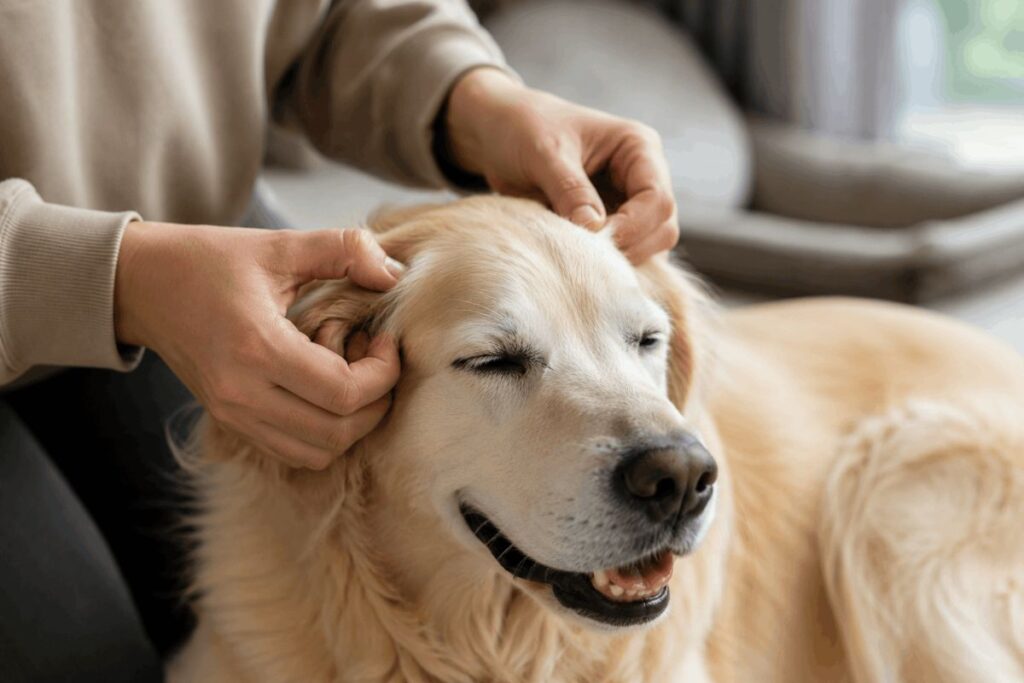
The vagus nerve has branches near your dog’s ears, which is why ear massage is probably the most talked-about technique. Gently cup the base of the ear — not the flap, but the base where it meets the head — and use slow, circular motions.
Most dogs respond within a minute or two. Max goes almost limp when I do this. I was skeptical at first, but it genuinely works, and my vet confirmed it’s one of the simplest ways to activate the parasympathetic response.
2. Co-Regulation Through Your Own Calm Breathing
This one surprises people. Dogs are incredibly sensitive to the energy of their humans. If you’re tense, they feel it. If you breathe slowly and deeply, research shows their nervous systems respond to yours.
Try this: sit quietly next to your dog. Breathe in for 4 seconds, hold for 4, exhale slowly for 6–8 seconds. Don’t touch them — just be calm near them. Give it five minutes. You might be surprised how quickly they settle.
3. Gentle Neck and Throat Massage
The vagus nerve travels through the neck, so light massage in that area can stimulate it directly. Use gentle, slow strokes — never firm pressure. Work from behind the jaw down toward the shoulder in a slow rhythm. This is especially helpful after a stressful event when your dog is already starting to come down but hasn’t fully settled.
4. Cool Water or Cold Compress Therapy
Cold activates the vagus nerve through a reflex response. Offering cool (not ice cold) drinking water can help. Or, place a slightly cool damp cloth on the back of your dog’s neck for 20–30 seconds. Many dogs find this oddly soothing, especially after excitement or during warm weather.
| Technique | Time Needed | Difficulty | Best For |
| Ear Massage | 1–3 minutes | Easy | Immediate anxiety, storms, vet visits |
| Co-Regulation Breathing | 5–10 minutes | Easy | Daily calm practice |
| Neck Massage | 2–5 minutes | Easy | Post-stress recovery |
| Cool Compress | 30 seconds | Very Easy | Overexcitement, hot days |
| Licking Mat | 5–15 minutes | Very Easy | Separation anxiety, mild stress |
| Sniff Walk | 20–30 minutes | Easy | Daily nervous system maintenance |
| TTouch | 5–10 minutes | Moderate | Chronic anxiety, reactive dogs |
5. Licking Mats and Sniff Walks
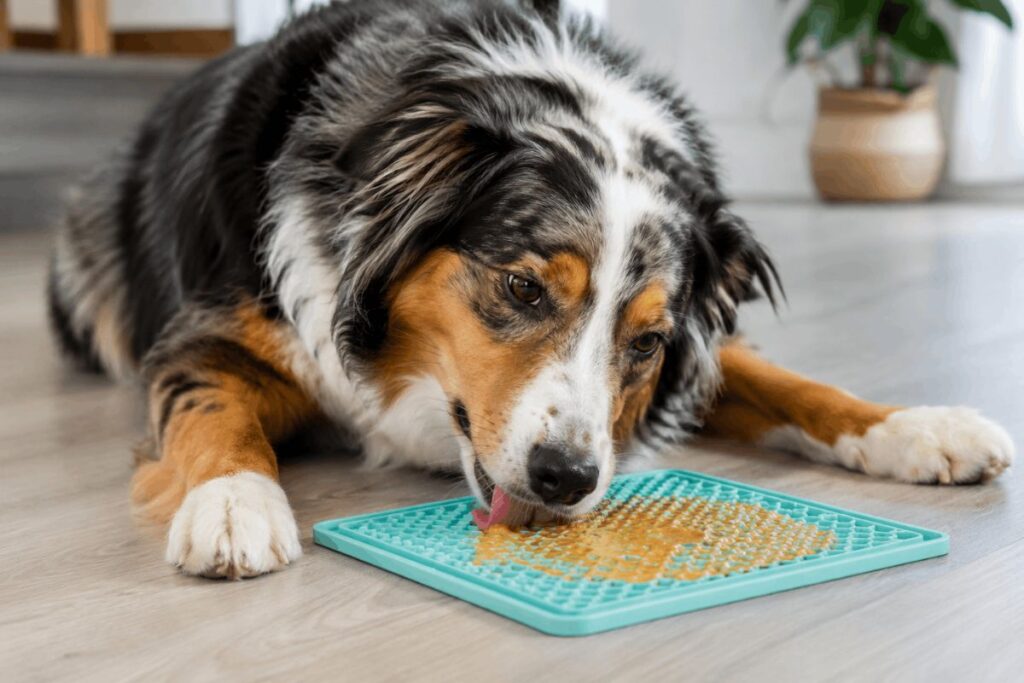
Slow, repetitive activities naturally activate the vagus nerve. Licking and sniffing both engage the parasympathetic system, which is exactly why a dog who spends 10 minutes working on a licking mat often looks genuinely sleepy afterward.
Sniff walks — where you let your dog lead and sniff wherever they want at their own pace — are one of the most underrated calming tools out there. Most dog owners are surprised by how tired and settled their dogs are after even a 20-minute slow sniff walk.
6. Slow Rhythmic Walks in Nature
Rhythm itself has a regulating effect on the nervous system. A slow, steady walk — especially in a quieter outdoor area — gives the vagus nerve a workout through rhythmic movement, sensory input, and natural scents. This isn’t a power walk. Think gentle stroll, your dog’s nose on the ground, no pulling, no rushing.
7. TTouch and Light Spinal Pressure
TTouch is a specific bodywork technique developed for animals that uses small circular motions along the spine, ears, and body. It’s been used by trainers and vets for decades. You don’t need a certification to try the basics — small, light circles along either side of the spine, working slowly from neck to tail.
It feels confusing at first, honestly. But once you get the rhythm, it’s one of the most effective tools for chronically anxious or reactive dogs.
What NOT to Do During a Vagus Nerve Reset
This section is just as important as the techniques themselves. A lot of well-meaning dog owners accidentally make things worse.
| What to Avoid | Why It Backfires |
| Forcing touch when dog is panicking | Touch can feel threatening during peak stress — it escalates, not calms |
| Using electric stimulation collars | No evidence they help; real risk of harm |
| Expecting instant results | Nervous system regulation is built slowly, over time — not in one session |
| Trying techniques mid-meltdown | Wait until your dog is at least slightly coming down before touching them |
| Treating it as a cure-all | Vagus nerve support helps, but severe anxiety needs professional guidance |
Dogs are not robots. You can’t unplug them and plug them back in. What you can do is build a daily practice of calm, gentle techniques — and over weeks and months, you’ll notice a real difference.
Frequently Asked Questions
Q: What is the vagus nerve in dogs?
It’s a major nerve connecting the brain to the heart, lungs, and digestive system. It plays a key role in helping dogs calm down after stress.
Q: Can you really “reset” a dog’s vagus nerve?
Not in a literal medical sense — but techniques like ear massage, calm breathing, and gentle touch do stimulate it, with real calming effects on behavior and body.
Q: What are signs my dog’s vagus nerve needs support?
Panting without exertion, digestive issues, inability to settle after stress, excessive licking, reactivity, and the freeze response are all common signs.
Q: Does ear massage actually calm dogs?
Yes — the vagus nerve has branches near the ear. Gentle base-of-ear massage has a real physiological calming effect for most dogs.
Q: Is vagus nerve stimulation used medically for dogs?
Surgically implanted vagus nerve stimulators are used in some epileptic dogs to reduce seizures. That’s completely separate from the at-home techniques in this post.
Final Thoughts — Dog Vagus Nerve Reset
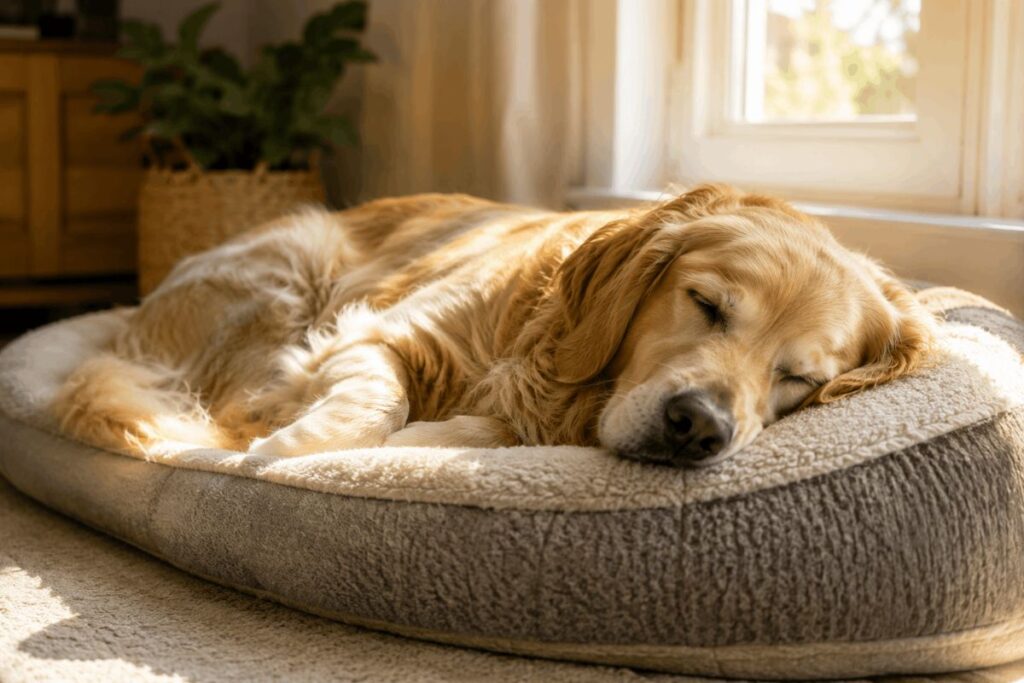
The dog vagus nerve reset trend is worth paying attention to — even if the name is a little over-simplified. What’s real is that your dog has a built-in calming system, and you can support it every single day with simple, gentle techniques.
Living with an anxious dog taught me that there’s no overnight fix. But building a daily calm practice — ear massage after walks, slow sniff sessions, quiet co-breathing before bed — genuinely changes things over time. Bella is proof of that.
Start small. Pick one or two techniques from this post and try them consistently for two weeks. Notice what your dog responds to most. And if your dog’s anxiety is severe, please don’t hesitate to loop in your vet — these tools work best as part of a bigger picture.
For more helpful dog care tips, explore the rest of the Dog Wise Hub blog — your dog’s best friend online!