
That moment your dog starts shaking their head every few minutes — you almost dismiss it. Maybe they just got water in their ear. Maybe it’s nothing.
Then comes the smell.
If you’ve been there, you already know what dog ear infection symptoms look like in real life. They creep in quietly, then get bad fast. This guide covers every sign to watch for — early and late — plus what causes them, how to prevent them, and exactly when to call your vet.
What Is a Dog Ear Infection?
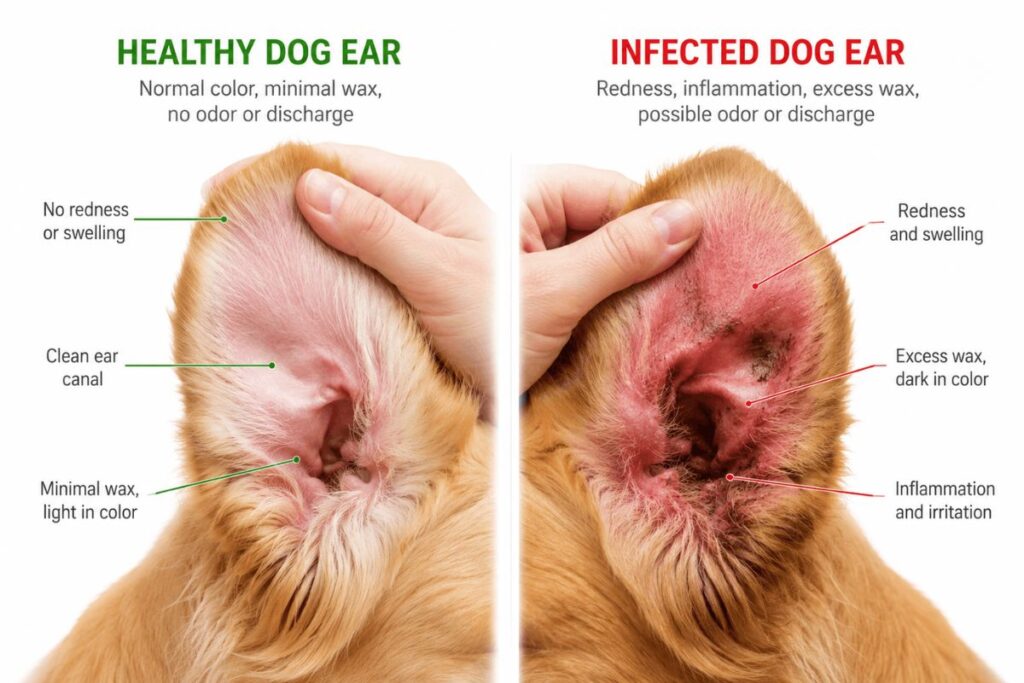
A dog ear infection — technically called otitis — happens when bacteria, yeast, or both overgrow inside the ear canal. According to Dr. Kelly Hood, DVM, veterinary expert at HonestPet, ear infections involve “inflammation of the ear canal with overgrowth of yeast, bacteria, or both.”
Dogs are far more prone to ear infections than humans, and their anatomy is the main reason. A dog’s ear canal forms an L-shaped tunnel — unlike the relatively straight human canal — which traps moisture, debris, and microorganisms in a warm, dark pocket. That’s the ideal environment for an infection to take hold. According to the American Kennel Club (AKC) guide on dog ear infections, early treatment can help prevent infections from progressing into more serious ear conditions.
The 3 Types of Dog Ear Infections
| Type | Area Affected | Severity | Common Signs |
| Otitis Externa | Outer ear canal | Mild to moderate | Scratching, redness, discharge |
| Otitis Media | Middle ear | Moderate to severe | Pain, head tilt, balance issues |
| Otitis Interna | Inner ear | Severe | Stumbling, vomiting, hearing loss |
Otitis externa is the most common type by far. Left untreated, however, it can push inward — spreading to the middle or inner ear and causing facial paralysis, deafness, or serious vestibular problems.
Why Dogs Get Ear Infections More Than Humans
Floppy-eared breeds face the highest risk. Their ear flaps fold down over the canal, trapping warmth and cutting off airflow. Breeds like Cocker Spaniels, Basset Hounds, and Beagles can develop a chronic cycle of infections if owners don’t stay on top of ear health.
Dogs that swim regularly face similar problems. Water gets trapped deep in that L-shaped canal, and unless the ears are dried properly after every swim, bacteria and yeast don’t need much invitation.
What Dog Owners Usually Notice First
Most ear infections don’t announce themselves dramatically. They start subtle — and that’s exactly why so many owners miss the early window for easy treatment.
Sarah, a Golden Retriever owner from Tennessee, describes it this way: “Max started shaking his head a lot after his swimming lessons. I figured it was just water. Three days later, I could smell his ears from across the room.”
That pattern — head shaking first, odor a few days later — is incredibly common. The shaking is your dog’s way of trying to dislodge whatever is irritating them. By the time the smell appears, the infection is already progressing.
Another thing owners often notice: their dog starts avoiding ear touches. A dog that normally loves a good behind-the-ear scratch will suddenly pull back, whine, or even snap. That behavior change is pain talking.
Pay attention to those first subtle clues. They’re your best opportunity to catch the infection before it becomes a bigger problem.
9 Dog Ear Infection Symptoms — From Mild to Severe
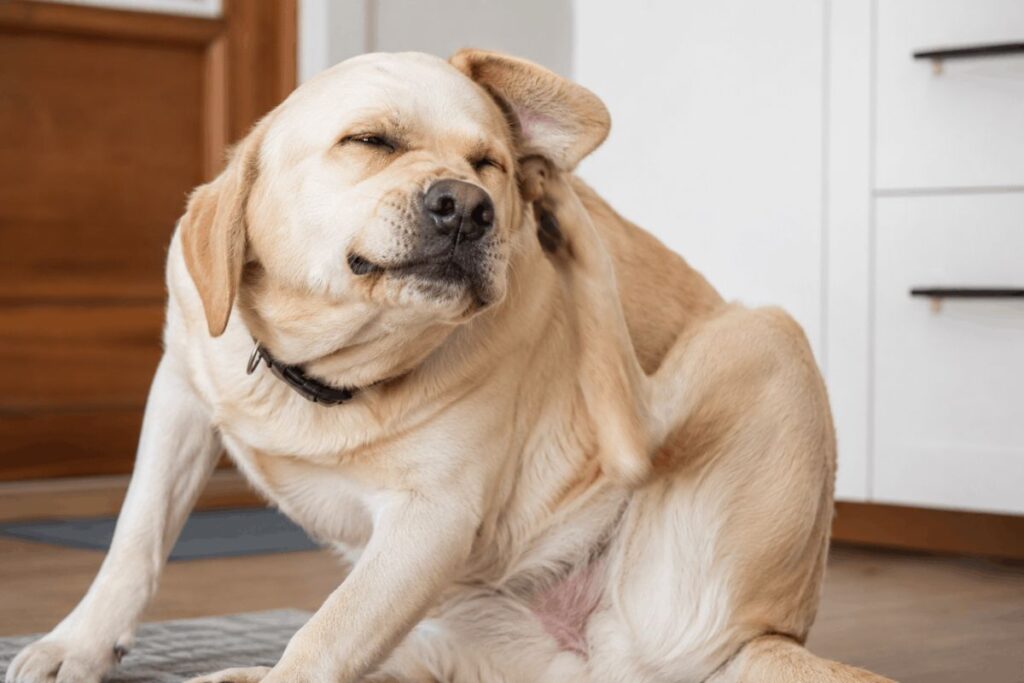
Here’s a complete breakdown of every major sign to watch for, organized from earliest to most serious.
Early Warning Signs
1. Frequent head shaking — Your dog repeatedly shakes their head from side to side, especially after waking up or coming inside. This is usually the very first sign.
2. Scratching or pawing at the ear — Persistent pawing at one ear, or rubbing their ear along the floor or furniture, signals itching and irritation inside the canal.
3. Foul odor — A sour, musty, or “corn chip” smell coming from the ears. Bacterial infections usually smell sour or pus-like. Yeast infections often produce that distinctive corn chip or musty odor.
4. Discharge or dark buildup — Brown and waxy usually means yeast. Yellow or green discharge points toward bacteria. Black, coffee-ground-like debris is a classic sign of ear mites.
5. Redness inside the ear — The inner ear flap and visible canal look pink to bright red. This is inflammation — your dog’s body reacting to the infection.
6. Sensitivity to touch — Your dog pulls away, whimpers, or reacts when you touch or come near their ear. Some dogs become noticeably irritable with handling they previously tolerated.
Advanced Symptoms That Need Urgent Care
If the early signs above go unaddressed, the infection can deepen into the middle or inner ear. These symptoms mean it’s time to act immediately — not tomorrow.
7. Head tilt — Your dog holds their head at an angle, with one ear closer to the ground. This signals the infection has likely moved into the middle or inner ear, where it affects balance.
8. Stumbling or loss of coordination — A dog that suddenly seems clumsy, circles in one direction, or falls to one side is showing vestibular signs. This is a veterinary emergency.
9. Behavioral changes — Eating less, sleeping more, seeming withdrawn or unusually anxious. These systemic changes reflect the level of pain your dog is experiencing and often accompany deeper infections.
Scabbing around the outer ear, swelling that narrows the ear canal opening, or any bloody discharge also fall into the urgent category and should not be left for a scheduled appointment.
Dog Ear Infection Causes: What’s Triggering the Problem?

Allergies are the number one underlying trigger — and the one owners most often miss. Dogs can react to food ingredients, pollen, dust mites, or household products. That immune response inflames the skin lining the ear canal, making it vulnerable to secondary bacterial or yeast overgrowth.
Moisture is the second major culprit. Every time your dog swims or gets a bath without proper ear drying afterward, that trapped warmth and dampness works in infection’s favor.
Other common triggers include ear mites (especially in puppies and in households with cats), foreign objects like grass seeds lodging in the canal, hormonal disorders like hypothyroidism, and excessive ear hair that blocks air circulation. Breeds prone to allergic skin disease — Bulldogs, German Shepherds, Boxers — tend to deal with ear infections as a recurring side effect of that underlying condition.
How to Prevent Dog Ear Infections
Prevention is where most dog owners can make the biggest difference — and where most pet blogs leave you hanging. Here’s what veterinarians actually recommend.
Check ears weekly. Make it part of your regular grooming routine. Look for redness, unusual smell, or discharge before it develops into a full infection. Early detection here saves significant pain and expense.
Dry ears thoroughly after swimming or baths. Use a soft cotton ball or a vet-approved ear-drying solution after every water exposure. Never use cotton swabs — they can push debris deeper and damage the ear canal.
Manage underlying allergies. If your dog has known food or environmental allergies, work with your vet to control them consistently. Keeping allergies in check is often the most effective way to break the cycle of recurring ear infections.
Use vet-approved ear cleaners. Regular cleaning with the right product removes excess wax and moisture before they build up. Ask your vet which cleaner suits your dog’s specific ear type — not all are appropriate for all dogs.
Groom excess ear hair. For breeds like Poodles and Shih Tzus, ask your groomer or vet about safely removing hair from the ear canal. This improves airflow significantly and reduces the warm, damp conditions that infections need.
How Vets Diagnose and Treat Dog Ear Infections
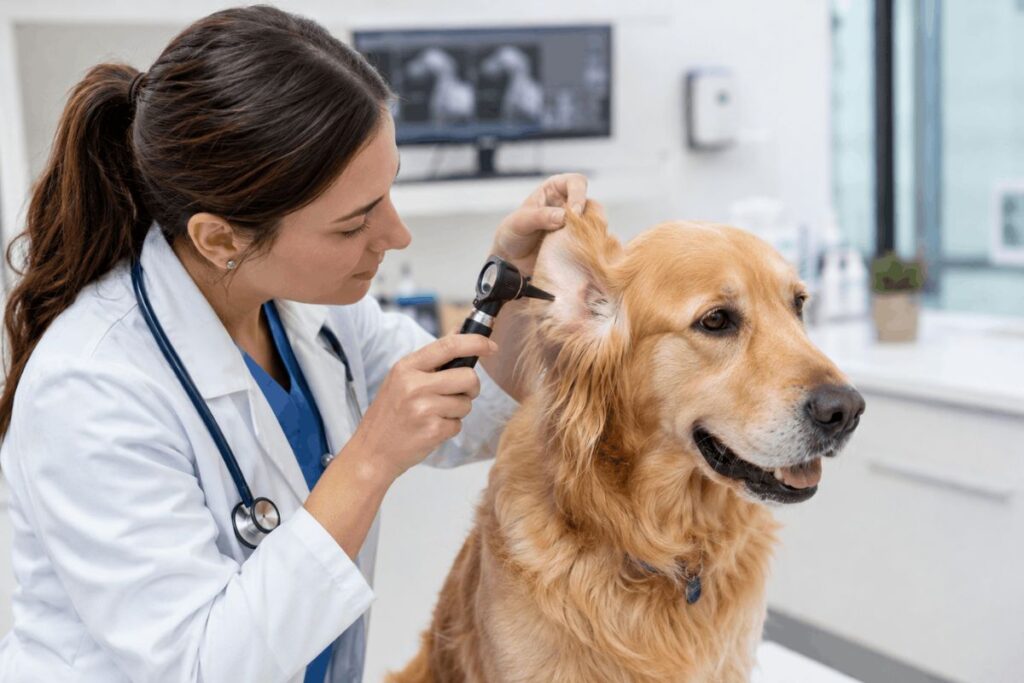
When you bring your dog in with suspected ear infection symptoms, your vet will take a thorough history first — how long symptoms have been present, whether one or both ears are affected, and any known allergy history.
The physical exam involves an otoscopic evaluation (a look deep into the canal) and ear cytology — collecting a small sample from the ear to identify exactly which organism is causing the infection. This matters because the treatment for a yeast infection is completely different from what clears a bacterial one.
Most outer ear infections are treated with prescribed ear drops used once or twice daily for 7 to 10 days, alongside a vet-recommended ear cleaner. Drops may contain an antibiotic, antifungal, anti-inflammatory, or a combination, depending on what the cytology reveals. For deeper or recurring infections, oral medications are often added.
Completing the full treatment course matters more than most owners realize. Stopping early when the ear looks better — but before the infection is fully cleared — is one of the most common reasons dogs end up back at the vet within weeks.
Home Care Tips While Waiting for Your Vet
Never attempt to treat a dog ear infection without a diagnosis. But while you’re waiting for your appointment, you can keep things from getting worse.
Gently wipe the visible outer ear flap with a dry cotton ball if there’s discharge — but don’t go digging into the canal. If your dog is scratching aggressively, a soft e-collar can prevent them from causing additional trauma. Skip any home remedies involving vinegar, hydrogen peroxide, or olive oil — they can disrupt the ear environment and sometimes make bacterial infections worse.
Frequently Asked Questions
Q: What are the very first signs of a dog ear infection?
Most dogs start with repeated head shaking and scratching at one ear. A foul odor usually follows within a day or two. These early signs are your best window for simple, effective treatment.
Q: How do I know if my dog’s ear infection is serious?
A head tilt, stumbling, loss of coordination, or sudden behavioral changes like refusing food signal that the infection has likely reached the middle or inner ear — see a vet the same day.
Q: What does a dog ear infection smell like?
Bacterial infections smell sour or pus-like. Yeast infections produce a musty odor often compared to corn chips or stale bread. Any strong, unfamiliar smell from your dog’s ears is worth a vet call.
Q: Can a dog ear infection go away without treatment?
Rarely. Most infections need prescribed medication to fully resolve. Without treatment, they commonly worsen and can progress to the middle or inner ear — risking permanent hearing damage.
Q: What’s the difference between a yeast and bacterial dog ear infection?
Yeast infections typically produce brown, waxy discharge with a musty smell. Bacterial infections tend to produce yellow or greenish discharge with a sour odor. A vet needs to run cytology to confirm before prescribing the right treatment.
Final Thoughts — Don’t Let Those Head Shakes Slide
Ear infections rarely start as emergencies. They usually begin with a few head shakes, a little scratching, or a faint odor that seems easy to ignore. Catching those early clues can spare your dog days of discomfort — and spare you a much more complicated (and expensive) treatment down the road.
The most important thing you can take from this guide: dog ear infection symptoms don’t wait. That first suspicious shake or faint smell is your invitation to check in and act fast. A quick vet visit at the right time almost always beats a prolonged recovery later.
For more expert-backed dog health advice, explore the rest of our blog — your dog’s ears (and the rest of them) will thank you.