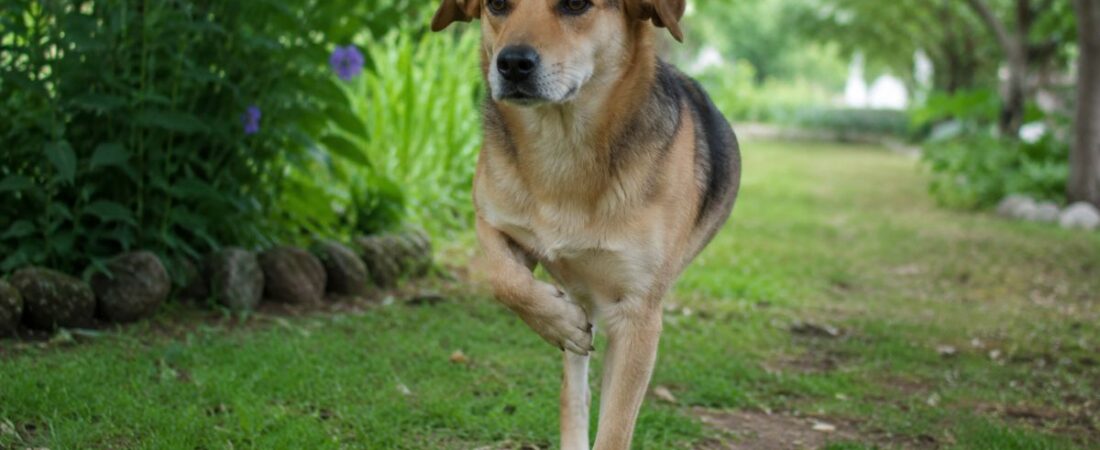
The moment Bella started holding her front leg up after our morning walk, my stomach dropped. One minute she was running fine, the next she was hobbling around on three legs. I checked her paw for thorns, felt for swelling, tried to stay calm — but honestly, it was terrifying.
If you’re reading this, you’re probably feeling the same way right now. A dog limping front leg is one of those situations that can be completely harmless or genuinely serious — and telling the difference matters. Let’s go through everything you need to know, step by step.
How to Tell If Your Dog Is Really Limping
This sounds obvious, but sometimes a front leg limp is subtle. Not every limping dog dramatically holds their leg in the air. Some dogs keep all four paws on the ground but shift their weight awkwardly, tense the affected leg, or move differently without you immediately realising why.
One helpful trick — watch your dog’s head as they walk. Dogs with front leg pain often bob their head downward as their healthy leg hits the ground, compensating for the painful one. Once you know this, you can’t unsee it.
Sudden Limping vs. Gradual Limping — Key Differences
The first thing to figure out is whether the limp came on suddenly or has been building slowly. This tells you a lot about what’s likely going on.
| Type | Onset | Likely Causes | Urgency |
| Sudden Limping | Minutes to hours | Paw injury, fracture, sprain, foreign object | Higher — check immediately |
| Gradual Limping | Days to weeks | Arthritis, elbow dysplasia, joint inflammation | Schedule vet visit |
| Intermittent Limping | On and off | Early arthritis, joint issues, overexertion | Monitor + vet check |
| After Rest Limping | Stiff on waking, walks off | Arthritis, joint stiffness | Common in older dogs |
9 Common Causes of Dog Limping Front Leg
When a dog limps on a front leg, most owners assume the paw is the problem — but the wrist, elbow, and shoulder are all equally at risk. Here’s what’s actually behind most cases.
Minor Causes That Often Resolve at Home
These are the ones where a little rest and monitoring is usually all you need — though keep an eye on things.
1. Paw Pad Injury Cuts, scrapes, blisters from hot pavement, or something stuck between the toes. This is the most common cause in active dogs. Check the paw carefully — sometimes a tiny thorn or piece of glass is completely invisible at first glance.
2. Broken or Torn Nail A broken nail hurts a lot more than most people expect. If the nail is cracked, split, or hanging off, that alone can cause significant limping. You might also notice your dog licking the paw constantly.
3. Muscle Strain or Sprain Dogs pull muscles and strain ligaments just like we do — especially after jumping, rough play, or an awkward landing. If the limping doesn’t improve within a day or comes with significant swelling, that’s when a vet visit becomes important.
4. Overexertion Sometimes a longer walk than usual or a particularly energetic play session is all it takes. Bella did this once after an especially wild afternoon in the park — she was fine by the next morning with just some rest.
More Serious Causes That Need a Vet
5. Elbow Dysplasia This is a developmental condition where the elbow joint doesn’t form properly. It’s common in larger breeds — Labradors, Golden Retrievers, German Shepherds — and often shows up as a front leg limp in young dogs aged 4 to 18 months. It doesn’t go away on its own.
6. Arthritis Many dogs develop joint issues that lead to intermittent limping — and arthritis is one of the most frequent culprits, especially in senior dogs. The classic sign is a dog that limps when they first get up after resting but seems to “walk it off” after a few minutes.
7. Shoulder or Wrist Injury Soft tissue damage to the shoulder or carpal (wrist) joint can cause persistent front leg lameness. These injuries are easy to miss because there’s often no visible swelling.
8. Fracture or Dislocation If your dog suddenly refuses to put any weight on the leg after a fall or collision, a fracture or dislocation may be to blame — and a vet exam with X-rays is needed right away. Don’t wait on this one.
9. Lyme Disease or Tick-Borne Illness Tick-borne diseases like Lyme disease can cause a dog to start limping — and the lameness sometimes shifts from leg to leg, which makes it harder to diagnose. If your dog has been in tick-prone areas, mention this to your vet immediately.
| Cause | Typical Age | Breed Risk | Vet Needed? |
| Paw pad injury | Any | Any | Only if severe |
| Broken nail | Any | Any | If fully torn |
| Muscle strain | Any | Any | If over 24 hours |
| Elbow dysplasia | 4–18 months | Large breeds | Yes |
| Arthritis | 7+ years | Any, especially large | Yes |
| Shoulder injury | Any | Active/sporting breeds | Yes |
| Fracture | Any | Any | Emergency |
| Lyme disease | Any | Any (tick areas) | Yes |
| Overexertion | Any | High-energy breeds | Usually no |
Emergency Signs — When to Act Immediately
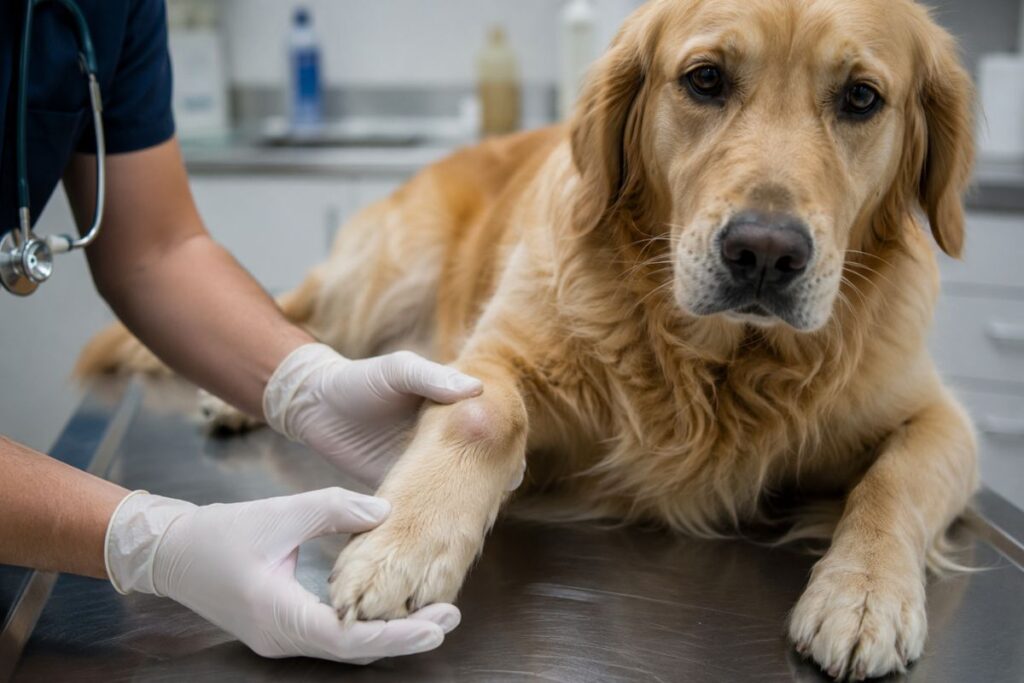
Most limps can wait until morning for a vet call. But some cannot. Front legs bear about 60% of a dog’s body weight, which is why front leg limping deserves careful attention.
Call an emergency vet right away if you see any of these:
| Emergency Sign | What It Looks Like |
| Complete weight refusal | Dog won’t touch the leg to the ground at all |
| Visible deformity | Leg sitting at a wrong or unusual angle |
| Bone exposure | Visible bone through skin — immediate emergency |
| Crying out when touched | Dog yelps or snaps when leg is handled |
| Excessive panting + trembling | Signs of severe pain or shock |
| Open wound with heavy bleeding | Won’t stop with gentle pressure |
| Dragging the paw | Could indicate nerve damage |
If any of these are happening — don’t wait. Call your vet or an emergency clinic now.
How to Check Your Dog’s Front Leg at Home
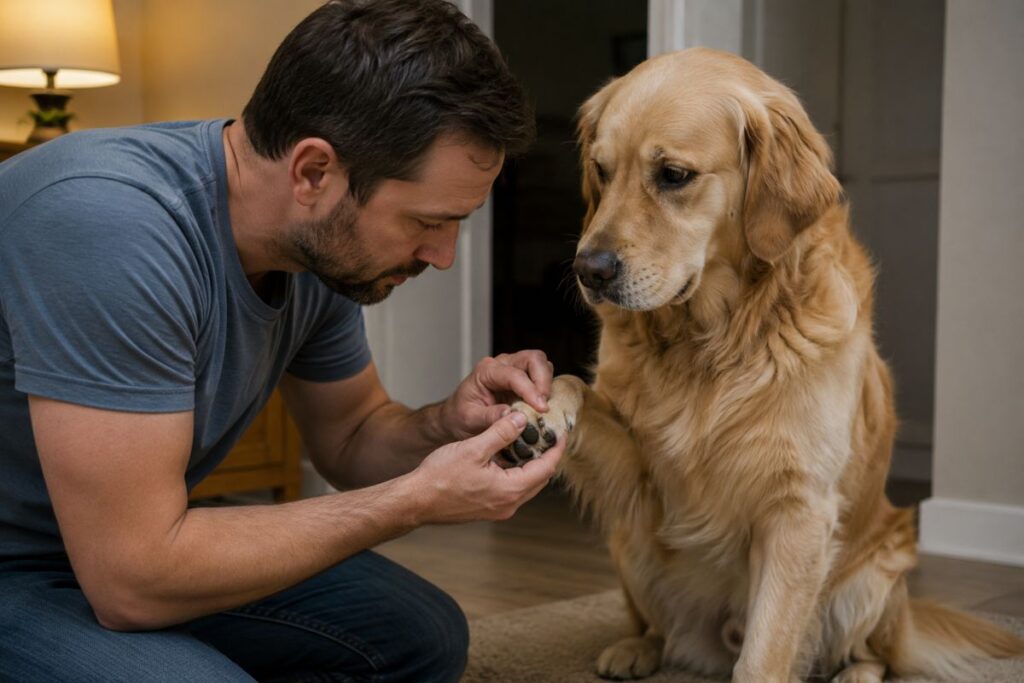
Before calling the vet, a gentle at-home check can give you useful information to share. Gently examine your dog’s paw for visible wounds, swelling, or foreign objects like glass or thorns — and look carefully between the toes for broken nails or cuts.
Don’t force the leg to move and don’t manipulate any joints if your dog shows pain. Work slowly, stay calm, and watch your dog’s reaction at each area — paw, wrist, elbow, shoulder. Where they flinch or pull away tells you a lot.
If your dog growls or snaps during this check, stop immediately. A dog in pain can bite even the most trusted person in their life. That’s not aggression — it’s pure instinct.
Home Care for Mild Dog Limping Front Leg
For minor limps with no emergency signs, here’s what you can do while you monitor:
| Home Care Step | What to Do | What to Avoid |
| Rest | Limit movement for 24–48 hours | Walks, stairs, jumping |
| Paw check | Remove any debris gently | Forcing movement of joints |
| Cold compress | Apply wrapped ice for 10 mins | Direct ice on skin |
| Soft bedding | Orthopedic or padded bed | Hard floors, cold surfaces |
| Monitor closely | Check for swelling, worsening | Giving human pain meds |
One very important thing — never give your dog human pain medications like ibuprofen or acetaminophen. These are toxic to dogs and can cause serious harm. If your dog needs pain relief, that needs to come from your vet.
How Vets Diagnose and Treat Front Leg Limping
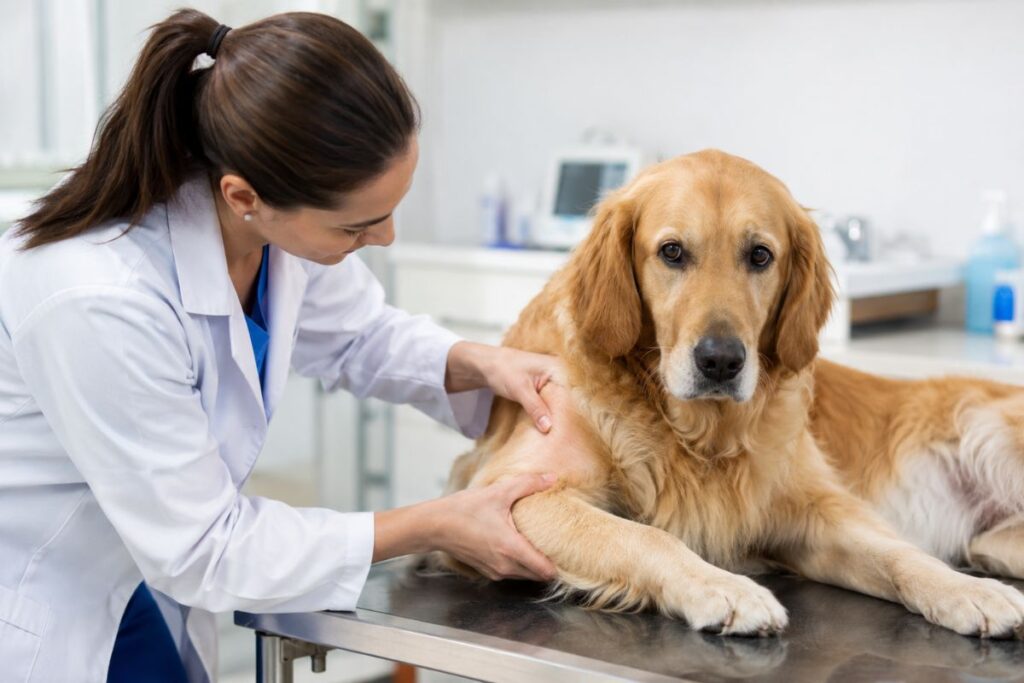
When you bring your dog in, your vet won’t just look at the leg. They’ll watch your dog walk and trot, observe movement from head-on, side-on, and from behind, and perform a full orthopaedic and neurological exam — checking range of motion and where the dog feels pain.
From there, depending on what they find, they may recommend:
- X-rays — for fractures, joint issues, bone abnormalities
- CT scan — especially useful for complex joints like the elbow
- Blood tests — to check for infections like Lyme disease
- Fluid analysis — if there’s joint swelling
Treatment varies widely based on the cause. Minor sprains might need just rest and anti-inflammatory medication. Elbow dysplasia or fractures may require surgery. For arthritis, ongoing management through weight control, pain relief, hydrotherapy, and laser therapy can significantly improve a dog’s quality of life. Dogsvibes
How to Prevent Front Leg Limping in Dogs
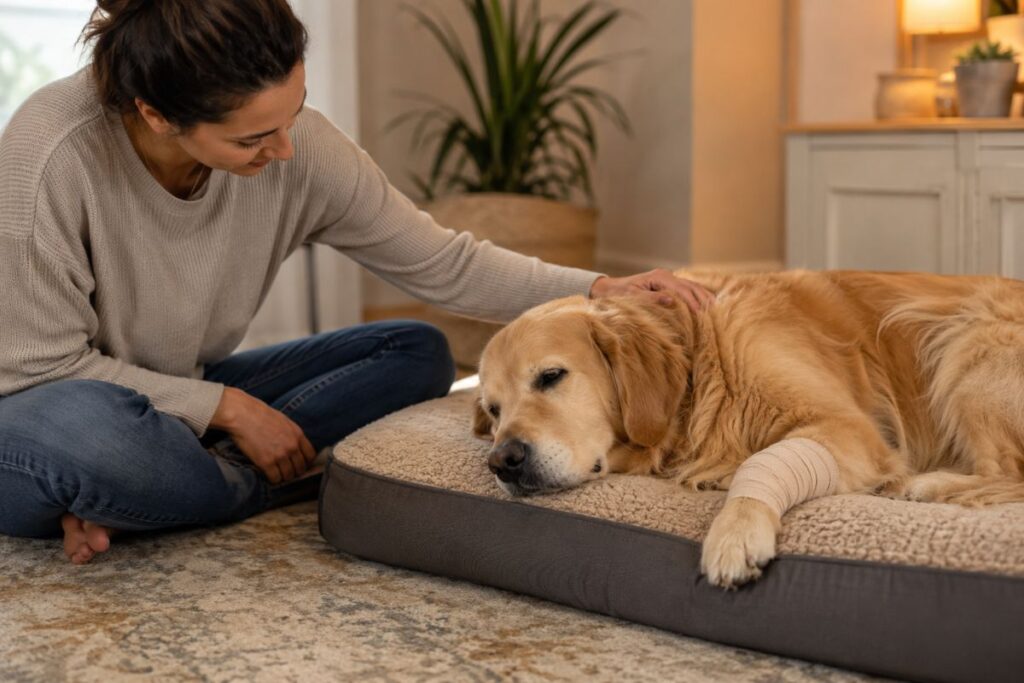
You can’t prevent every injury, but you can reduce the risk significantly.
| Prevention Step | Why It Helps |
| Regular, consistent exercise | Builds muscle that protects joints |
| Maintain healthy weight | Reduces pressure on front legs and joints |
| Check paws after every walk | Catches debris, cuts, and nail damage early |
| Warm up before intense activity | Prevents muscle strains and sprains |
| Annual vet checkups | Catches joint conditions before they worsen |
| Non-slip surfaces at home | Prevents slipping injuries, especially in seniors |
| Joint supplements (vet-approved) | Supports cartilage health in at-risk breeds |
My other dog, Max has been on a vet-recommended joint supplement since he turned seven. His mobility has stayed genuinely good — and my vet said catching it early makes a real difference in how dogs age.
Frequently Asked Questions
Q: Why is my dog suddenly limping on a front leg?
Sudden limping is usually caused by a paw injury, broken nail, muscle strain, or a fall. If the dog won’t bear any weight on the leg, see a vet the same day.
Q: When should I take my dog to the vet for a front leg limp?
If the limp lasts more than 24 hours, is getting worse, or comes with swelling, crying, or complete weight refusal — call your vet. Don’t wait it out beyond a day.
Q: Can a dog’s limp go away on its own?
Minor strains and paw injuries often do resolve with 24–48 hours of rest. More serious causes like fractures, elbow dysplasia, or Lyme disease will not improve without treatment.
Q: Why does my dog limp after resting but then walk it off?
This is a classic sign of arthritis or joint stiffness. The joints are stiff after inactivity and loosen up with movement. It’s worth a vet visit — early management makes a big difference.
Q: What can I give my dog for front leg pain at home?
Rest, a cold compress, and soft bedding are safe at-home options. Never give human pain medications — ibuprofen and acetaminophen are toxic to dogs. Ask your vet about safe pain relief options.
Final Thoughts — Dog Limping Front Leg
A dog limping on their front leg is one of those things that hits you right in the gut as a dog owner. It can be something as simple as a pebble stuck in the paw — or something that genuinely needs attention. Knowing the difference is what matters most.
Start with a calm at-home check. Watch for emergency signs. Rest your dog if the limp is mild. And if it’s been more than 24 hours, or you’re just not sure — call your vet. You know your dog better than anyone. Trust that instinct.
Bella has limped a handful of times over the years. Every single time, catching it early and acting quickly made the recovery faster and easier. Don’t overthink it — just pay attention and act when something doesn’t feel right.
For more helpful dog care tips, explore the rest of the Dog Wise Hub blog — your dog’s best friend online!